What this guide helps you decide
Use the article to prepare questions, compare public listing signals, and avoid choosing a provider from one headline, rating, or search result alone.
- When a Skunk Sprays Your Car: The Moment Everything Stops Smelling Normal
- The First 10 Minutes After Skunk Exposure Matter More Than Anything
- The Truth About the Tomato Juice Myth
- Confirm current hours, services, prices, appointment rules, and availability with the provider.
- Compare more than one listing when the decision affects safety, cost, or travel time.
- Use public ratings and photos as signals, not guarantees.
- skunk-spray-car-emergency-cleaning-steps - Immediate actions after a skunk spray incident
- tomato-juice-myth-explained-odor-removal - Why tomato juice does not actually remove skunk smell
- deep-car-wash-odor-neutralizing-techniques - Proper cleaning methods for lasting odor removal
- interior-exterior-car-decontamination-guide - Cleaning every part of the vehicle effectively
- professional-car-wash-support-and-tools - When to seek expert help like Gibby Car Wash services
When a Skunk Sprays Your Car: The Moment Everything Stops Smelling Normal
If you have ever driven through a quiet rural road late at night and suddenly caught that unforgettable burning-sulfur smell, you already know what comes next: panic. A skunk spray incident is one of those unexpected situations that turns a normal drive into a full-on cleaning emergency.
Many drivers immediately search for how to wash a car skunk smell out, hoping for a quick fix. The most common advice passed around for decades? Tomato juice. But as many car owners eventually discover, this old remedy is more myth than solution.
This guide breaks down what actually works, what doesn’t, and how to properly restore your car’s interior and exterior after a skunk encounter—based on real cleaning experience rather than folklore.
The First 10 Minutes After Skunk Exposure Matter More Than Anything
Why Immediate Action Prevents Long-Term Odor Damage
Skunk spray contains sulfur-based compounds called thiols, which bond quickly to surfaces. The longer you wait, the deeper the smell embeds into fabric, air vents, and even paint texture.
One driver from a small town in Wisconsin shared a story where they continued driving home after a skunk crossed the road. By the time they reached their garage, the smell had already entered the AC system, turning every future drive into a lingering reminder of that night.
What You Should Do Right Away
Open all windows immediately if safe to do so. Turn off air recirculation in the HVAC system to prevent spreading contamination inside the cabin. Avoid using plain water or wipes at this stage—it often spreads the oils instead of neutralizing them.
The Truth About the Tomato Juice Myth
Why People Believe It Works
The idea of using tomato juice became popular decades ago, mostly because it temporarily masks odor with a stronger smell. However, masking is not the same as removing.
When discussing how to wash a car that has been sprayed by a skunk, it’s important to understand that tomato juice does not chemically break down thiols. It simply adds another scent layer, which fades quickly and leaves the original odor unchanged.
What Science Actually Says
Odor removal requires oxidation or neutralization of sulfur compounds. Tomato juice lacks the chemical properties needed for this process, which is why professionals rarely recommend it.
Instead, specialized oxidizing cleaners or enzyme-based solutions are far more effective in breaking down odor molecules at the source.
Exterior Cleaning: Removing Skunk Residue from Paint and Wheels
Step-by-Step Safe Wash Process
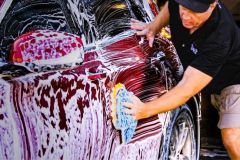
Start with a gentle rinse using low-pressure water to avoid embedding contaminants further into the paint. Follow with a pH-balanced automotive shampoo designed for odor contamination situations.
Avoid scrubbing aggressively at first. Skunk oils can smear easily, spreading contamination across larger surfaces if handled incorrectly.
Wheel Wells and Undercarriage Often Get Ignored
A common mistake is focusing only on visible areas. Skunk spray droplets can land on wheel wells, suspension components, and underbody panels.
A car detailer once shared that nearly 40% of lingering odor cases come from neglected undercarriage cleaning rather than interior contamination.
Interior Decontamination: Where Odor Becomes Trapped
Seats, Carpets, and Air System Contamination
Fabric surfaces absorb odor quickly. If the windows were open during exposure, seats and carpets are usually the first areas affected.
Ventilation systems can also circulate odor repeatedly, even after visible cleaning is complete. That’s why HVAC deodorization is a critical step in any skunk cleanup process.
Why DIY Cleaning Sometimes Fails
Many car owners attempt multiple sprays or air fresheners, only to realize the smell returns after a few hours. This happens because odor molecules remain embedded in porous materials.
Without deep extraction tools or enzymatic cleaners, surface-level cleaning only provides temporary relief.
Real Case: A Weekend Trip That Turned Into a Cleaning Mission
A family traveling through rural Pennsylvania shared their experience of encountering a skunk near a campsite. They initially tried airing out the car and using household cleaners, but the smell persisted for days.
Eventually, they opted for a full professional detailing service. The process included ozone treatment, deep carpet extraction, and HVAC cleaning. Within 24 hours, the odor was almost completely eliminated.
This case highlights how stubborn skunk odor can be when not handled with the right approach early on.
Professional Cleaning Methods That Actually Work
Ozone Treatment Explained Simply
Ozone generators produce oxidizing molecules that break down odor compounds at a chemical level. This method is widely used in professional detailing because it reaches areas that manual cleaning cannot.
Enzyme-Based Cleaners for Fabric Surfaces
Enzymatic cleaners target organic compounds and help neutralize odor molecules trapped in fabric fibers. They are especially useful for seats and floor mats.
Many professional services, including providers like Gibby Car Wash, integrate these treatments into full restoration packages for severe odor contamination cases.
Preventing Future Skunk Encounters While Driving
Awareness During Rural and Night Driving
Skunks are most active during nighttime and early morning hours. Driving cautiously in rural areas reduces the risk of sudden encounters.
Parking and Outdoor Exposure Considerations
Leaving windows open in rural or wooded environments increases exposure risk. Even parked vehicles can sometimes be sprayed if skunks feel threatened nearby.
Lessons Car Owners Learn After Their First Skunk Incident
Most drivers agree that the experience changes how they think about car cleaning entirely. It’s not just about appearance anymore—it becomes about contamination control and odor chemistry.
Understanding how to wash a car that has been sprayed by a skunk is less about quick tricks and more about structured cleaning steps, patience, and using the right materials.
Whether you handle it yourself or rely on professional services like Gibby Car Wash, the key takeaway is simple: act fast, avoid myths, and treat odor at its chemical source rather than masking it.
Related Car Wash Guides
Keep reading if you are still comparing service scope, estimate questions, maintenance needs, or listing quality.
 How to Clean Car Navigation Screen Without DamageLearn How to Clean Car Navigation Screen safely without harsh chemicals. Discover the best cleaning methods, tools, mistakes to avoid, and professional car care tips for keeping your touchscreen clear.
 Why Wash Your Car Before Waxing or Sealing? Prep MattersLearn why you should wash your car before applying wax or sealant and how proper prep work improves shine, protection, and long-lasting results for your vehicle.
 Steam Car Wash Near Me for Interior Sanitizing Without WaterDiscover how a car wash near me that uses steam cleaning can sanitize your vehicle interior without water, remove odors, and provide an eco friendly deep cleaning solution.
 Best Car Wash for Chevy Equinox Plastic Trim CareDiscover how to choose the best car wash near me for Chevy Equinox models and prevent plastic trim drying streaks with proper washing and detailing techniques.
 Car Wash Near Me With Fleet Account Management and ReportsDiscover how a car wash near me with fleet account management, online billing, and detailed reports helps businesses save time, control costs, and keep company vehicles clean.
 Best Car Wash for Convertible Tops Near Me