What this guide helps you decide
Use the article to prepare questions, compare public listing signals, and avoid choosing a provider from one headline, rating, or search result alone.
- Roof Racks Before a Car Wash: Gear, Clearance, Limits
- Quick answer
- Identify every part above the factory roofline
- Confirm current hours, services, prices, appointment rules, and availability with the provider.
- Compare more than one listing when the decision affects safety, cost, or travel time.
- Use public ratings and photos as signals, not guarantees.
Roof Racks Before a Car Wash: Gear, Clearance, Limits
On this page
Quick answer
Before taking a vehicle with a roof rack through a car wash, remove all cargo and loose accessories, measure the vehicle's current total height, and read the rack, vehicle, and wash instructions. Automatic equipment can catch bars, baskets, straps, awnings, mounts, or antennas. If compatibility is unclear, do not rely on visual clearance; choose a hand wash or another method the manufacturers permit.
Identify every part above the factory roofline
A roof-rack system can include fixed rails, removable crossbars, towers, baskets, boxes, bike or ski carriers, awnings, lights, fairings, locks, and loose strap ends. The risk is not only height. Brushes, curtains, blowers, tracks, and overhead equipment can apply side or lifting forces or catch a projection. A wash that accepts factory rails may prohibit aftermarket bars or attachments. Compatibility depends on the exact vehicle, rack, installed accessories, and wash equipment.
This guide is for United States drivers preparing for a commercial car wash. It is not permission to remove structural hardware without instructions, climb on an unstable surface, or enter a wash after staff or signage prohibits the configuration.
Practical checklist
- Remove bicycles, skis, boards, luggage, tents, boxes, loose tools, and every unsecured strap or cord.
- Read the vehicle and rack instructions for automatic-wash restrictions and removal procedures.
- Inspect crossbars, towers, end caps, locks, fairings, baskets, awnings, and mounts for looseness or protrusion.
- Measure total height at the highest installed point on level ground and include anything temporarily raised.
- Check the wash's posted height, width, wheel, rack, accessory, and vehicle-type restrictions.
- Ask staff about the exact rack, but do not treat an uncertain verbal answer as manufacturer approval.
- Remove approved removable components using their instructions and store hardware securely.
- Choose a compatible hand-wash method when automated contact or clearance remains uncertain.
Step-by-step plan
- Unload the roof completely at home or in a safe parking area, not in the wash queue.
- List each permanent and removable component and check both the rack maker and vehicle manual.
- Measure total height and inspect side projections, strap tails, covers, locks, and moving parts.
- Compare the setup with the specific wash's current signage and equipment. Different locations under one name may use different machinery.
- If removal is permitted, use stable ground and the specified tool and sequence; do not stand on tires, door sills, or loose stools.
- If the rack remains installed, choose only a wash method explicitly compatible with it and follow staff positioning instructions.
- After washing, inspect mounting points, finish, seals, and retained parts before loading cargo again.
Record installed rack components, total vehicle height, wash method, manufacturer restrictions, removal tool, and post-wash inspection. Update the note whenever bars, tires, suspension, cargo accessories, or antenna height changes.
Limits and important notes
A stated height clearance does not guarantee that brushes or moving equipment will avoid a rack. Touchless does not mean risk-free because gantries and high-pressure spray still have operating envelopes. Removing crossbars incorrectly can damage mounts or seals. Never loosen a loaded rack, and never enter equipment contrary to posted rules.
Do not enter when cargo remains attached, a rack part is loose, the vehicle exceeds any limit, staff cannot confirm the equipment rule, or manufacturer guidance prohibits the wash. If equipment contacts the vehicle, follow the wash's emergency instructions, remain in the vehicle unless directed otherwise, and document damage safely after exiting.
Frequently asked questions
Can factory roof rails go through every automatic wash?
No. Factory rails may be acceptable at some washes, but equipment and policies vary. Check the vehicle manual and the specific wash's posted restrictions.
Is a touchless wash always safe for roof racks?
No. Touchless systems still have gantries, clearance limits, and high-pressure spray. Confirm exact compatibility rather than relying on the word touchless.
Should I remove crossbars before washing?
Follow the rack and vehicle instructions. Some bars are designed for removal; others require specific tools or seals. Remove only when authorized and safe.
Does measuring vehicle height solve every risk?
No. Height is one factor. Side projections, loose parts, moving equipment, wheel tracks, and the wash's rack policy also matter.
Sources and evidence
This article follows general manufacturer-first vehicle and accessory practice: remove cargo, secure or remove permitted accessories, measure the actual configuration, and obey the specific wash's posted equipment limits. Vehicle, rack, accessory, and car-wash instructions remain controlling. No universal clearance, acceptable rack type, or automatic-wash guarantee is claimed.
Conclusion and next steps
Unload the roof, list every rack component, and check the vehicle and rack manuals. Measure total height and compare it with the exact wash's current rules. When any projection, removal step, or equipment interaction is uncertain, choose a manufacturer-compatible hand wash instead of testing the risk inside an automatic bay.
Related Car Wash Guides
Keep reading if you are still comparing service scope, estimate questions, maintenance needs, or listing quality.
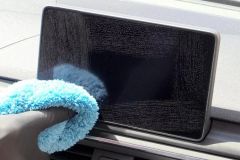 How to Clean Car Navigation Screen Without DamageLearn How to Clean Car Navigation Screen safely without harsh chemicals. Discover the best cleaning methods, tools, mistakes to avoid, and professional car care tips for keeping your touchscreen clear.
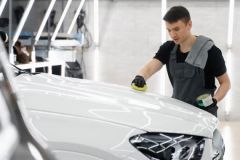 Why Wash Your Car Before Waxing or Sealing? Prep MattersLearn why you should wash your car before applying wax or sealant and how proper prep work improves shine, protection, and long-lasting results for your vehicle.
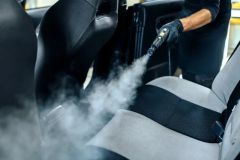 Steam Car Wash Near Me for Interior Sanitizing Without WaterDiscover how a car wash near me that uses steam cleaning can sanitize your vehicle interior without water, remove odors, and provide an eco friendly deep cleaning solution.
 Best Car Wash for Chevy Equinox Plastic Trim CareDiscover how to choose the best car wash near me for Chevy Equinox models and prevent plastic trim drying streaks with proper washing and detailing techniques.
 Car Wash Near Me With Fleet Account Management and ReportsDiscover how a car wash near me with fleet account management, online billing, and detailed reports helps businesses save time, control costs, and keep company vehicles clean.
 Best Car Wash for Convertible Tops Near Me