What this guide helps you decide
Use the article to prepare questions, compare public listing signals, and avoid choosing a provider from one headline, rating, or search result alone.
- Self-Service Car Wash Guide: Use the Bay Without Rushing
- Quick answer
- Plan before you enter the bay
- Confirm current hours, services, prices, appointment rules, and availability with the provider.
- Compare more than one listing when the decision affects safety, cost, or travel time.
- Use public ratings and photos as signals, not guarantees.
Self-Service Car Wash Guide: Use the Bay Without Rushing
On this page
Quick answer
At a self-service car wash, read the posted rules and control sequence before paying, park centrally, close the vehicle, keep the hose clear of paint, and work from a safe distance using the least aggressive setting that removes dirt. Rinse from top to bottom, avoid spraying directly into damaged trim, seals, sensors, or electrical openings, then move to a designated drying area before checking the vehicle.
This guide is for drivers using coin, card, or app-operated self-service wash bays in the United States. Equipment pressure, chemicals, timers, accepted vehicles, and local rules vary. Posted facility instructions and the vehicle manufacturer's cleaning guidance take priority.
Plan before you enter the bay
- Check the location's current hours, vehicle limits, payment methods, and whether staff are present.
- Confirm that the bay accepts the vehicle's height, width, length, trailer, accessories, and commercial use.
- Bring only permitted supplies. Some facilities prohibit bucket washing, outside chemicals, engine cleaning, muddy off-road vehicles, or extended detailing.
- Remove loose exterior items at home: magnetic signs, antenna attachments, temporary decorations, unsecured cargo, and accessories the manufacturer says to remove.
- Choose a cool time when possible so cleaner and rinse water are less likely to dry before removal.
- Have payment ready before entering, but do not handle the phone while the vehicle is moving.
Check the vehicle and restrictions
Walk around the vehicle in a safe parking area before joining the bay line. Look for peeling paint, loose trim, damaged seals, cracked lenses, open fuel or charge doors, low-hanging parts, and fresh body or glass repair. A pressure wand can worsen an existing weak edge.
Close windows, sunroof, doors, trunk, hood, convertible top, and all service doors. Fold or remove accessories only as the vehicle instructions permit. Do not spray the engine bay, under-hood electrical components, exhaust opening, fuel opening, charge port, or damaged body area unless the manufacturer and facility explicitly provide a safe method.
If the vehicle has matte paint, a wrap, ceramic coating, aftermarket film, custom wheels, open-top features, or specialty components, confirm product and pressure compatibility before the visit. When uncertain, use a qualified detailer familiar with that finish.
Set up the bay safely
- Wait outside until the bay is clear. Give the previous vehicle room to exit and employees time to service equipment.
- Enter slowly. Watch curbs, drains, hose booms, and wall-mounted equipment. Center the vehicle so you can walk around it.
- Park and secure the vehicle. Follow the vehicle's parking instructions, set the parking brake when appropriate, turn off the engine unless facility rules say otherwise, and take the key.
- Scan the floor. Avoid hoses, pooled chemicals, ice, debris, and slippery areas. Wear closed footwear with useful traction.
- Read the controls. Identify the selector, start method, price, remaining-time display, pause function if any, stop process, and emergency contact.
- Check the tools. Confirm the wand hose is not tangled and that any shared brush is not visibly damaged or holding grit.
Use a practical wash sequence
The exact selector order varies, but a simple plan prevents wasted time:
- Pre-rinse. Hold the wand with two hands, point it away from people, and begin at a safe distance. Rinse loose dirt from top to bottom, including wheel wells only when permitted.
- Apply cleaner. Use the facility's setting as directed. Work in manageable sections and do not let chemical dry on the finish.
- Use contact only when suitable. A shared foam brush can hold grit from prior vehicles. Inspect and rinse it according to facility rules; skip it when cleanliness or finish compatibility is uncertain.
- Rinse thoroughly. Move from roof to glass, upper panels, lower panels, wheels, and permitted underbody areas. Check mirrors, trim, handles, badges, and panel gaps for remaining foam.
- Use optional treatments carefully. Wax, spot-free rinse, or protectant settings have facility-specific directions. Do not assume every product suits every coating, glass, wheel, or matte surface.
Maintain a consistent sweeping motion instead of holding the jet in one place. Increase distance around seals, emblems, paint chips, repaired areas, sensors, cameras, tires, and edges. Never aim the stream at a person or animal.
Handle the wand and brush carefully
Keep the high-pressure hose from dragging across the hood, roof, trunk, or sharp body edges. Walk the hose around the vehicle rather than pulling it over paint. Stay aware of the overhead boom so the hose does not catch a mirror, rack, antenna, or open accessory.
Do not test pressure against your hand or foot. The stream can injure skin and eyes. Keep a stable stance, anticipate wand reaction when a high-pressure setting begins, and stop if the trigger, hose, coupling, or boom appears damaged.
If using a shared brush, rinse visible debris from the bristles in the approved way and keep it off the ground. Use light straight passes with plenty of foam. Skip the brush on delicate or dark finishes when you cannot verify that it is clean.
Manage time and payment
Before starting, mentally divide the vehicle into sections and place the wand where you can reach it safely. Add time only while parked and standing clear of traffic. Read whether the machine authorizes a fixed amount, places a temporary card hold, charges by time, or requires a stop action.
Do not rush across a slick floor to beat the timer. If time expires, release the trigger, secure the wand in its holder, and restart only after checking the process. If the machine does not stop charging or returns an error, document the bay number and contact the facility through its posted method.
Move extended drying, vacuuming, floor-mat work, and interior cleaning to the areas assigned for them. Remaining in an active bay after the wash is complete can block the line.
Finish and exit without surprises
- Release the trigger and verify water flow has stopped.
- Return the wand, brush, and hose to their holders without crossing the driving path.
- Walk around the vehicle for open doors, loose items, trapped hose, and obvious remaining foam.
- Check the floor around the tires and your exit path.
- Enter the vehicle with dry enough footwear to control the pedals securely.
- Move slowly to the designated drying or inspection area.
- Dry glass, mirrors, handles, fuel or charge doors, and water-trapping gaps as appropriate.
- At low speed in a clear area, verify normal visibility and braking response before entering traffic.
Limitations and important notes
- Self-service pressure cannot safely remove every contaminant. Tar, sap, bonded particles, oxidation, and stains may require a surface-specific method or professional correction.
- Never mix outside chemicals with facility products or combine cleaners without confirmed compatibility.
- Children and pets should remain in a safe permitted location away from the wand, hoses, chemicals, and moving vehicles.
- Do not wash when standing water has frozen or when weather makes the bay or vehicle controls unsafe.
- Report leaking hoses, exposed wiring, damaged triggers, blocked drains, or chemical spills to the operator and use another bay.
Frequently asked questions
Should I rinse the foam brush before touching the car?
Follow the facility rules and inspect it. Rinsing may remove visible debris, but it cannot prove the brush is free of grit. Skip contact when the finish is delicate or the brush condition is uncertain.
How close should the pressure wand be to the paint?
Use the facility and vehicle guidance. Start farther away and move only as needed, maintaining extra distance from damaged paint, trim, seals, sensors, tires, and repaired surfaces.
Can I hand-dry inside the wash bay?
Only if the posted rules allow it and no line or traffic conflict exists. A designated drying area is usually the better place for detailed work.
Is spot-free rinse the same as drying?
No. It may reduce mineral residue, but water can remain in gaps and on the surface. Dry according to the finish and weather conditions.
What if the machine keeps charging?
Use the stated stop method, note the bay, time, and payment record, and contact the operator. Do not attempt to open or repair the payment equipment.
Evidence notes
This guide follows common vehicle-cleaning and shared-equipment practice: inspect the vehicle, read facility controls, use the least aggressive effective method, maintain pressure distance, keep hoses off paint, prevent chemical drying, separate active-bay and detailing tasks, and check visibility and control before driving. Exact requirements come from the vehicle, finish, equipment, and facility instructions.
Next steps
Before the visit, photograph any vulnerable area, remove loose items, and confirm the wash accepts the vehicle. At the bay, read the sequence before paying, use the top-to-bottom plan, return every tool, and move to the designated area for drying and a final road-readiness check.
Related Car Wash Guides
Keep reading if you are still comparing service scope, estimate questions, maintenance needs, or listing quality.
 How to Clean Car Navigation Screen Without DamageLearn How to Clean Car Navigation Screen safely without harsh chemicals. Discover the best cleaning methods, tools, mistakes to avoid, and professional car care tips for keeping your touchscreen clear.
 Why Wash Your Car Before Waxing or Sealing? Prep MattersLearn why you should wash your car before applying wax or sealant and how proper prep work improves shine, protection, and long-lasting results for your vehicle.
 Steam Car Wash Near Me for Interior Sanitizing Without WaterDiscover how a car wash near me that uses steam cleaning can sanitize your vehicle interior without water, remove odors, and provide an eco friendly deep cleaning solution.
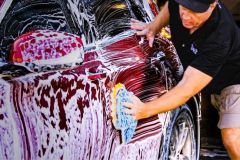 Best Car Wash for Chevy Equinox Plastic Trim CareDiscover how to choose the best car wash near me for Chevy Equinox models and prevent plastic trim drying streaks with proper washing and detailing techniques.
 Car Wash Near Me With Fleet Account Management and ReportsDiscover how a car wash near me with fleet account management, online billing, and detailed reports helps businesses save time, control costs, and keep company vehicles clean.
 Best Car Wash for Convertible Tops Near Me