What this guide helps you decide
Use the article to prepare questions, compare public listing signals, and avoid choosing a provider from one headline, rating, or search result alone.
- Undercarriage Wash: What It Can and Cannot Remove
- Quick answer
- What an undercarriage wash does
- Confirm current hours, services, prices, appointment rules, and availability with the provider.
- Compare more than one listing when the decision affects safety, cost, or travel time.
- Use public ratings and photos as signals, not guarantees.
Undercarriage Wash: What It Can and Cannot Remove
On this page
Quick answer
An undercarriage wash can rinse loose road salt, mud, sand, and grime from accessible areas beneath a vehicle. It cannot reverse corrosion, repair leaks, restore missing coatings, or reach every trapped pocket. Before washing, check for loose shields, damaged wiring, active leaks, and manufacturer restrictions. Use moderate, well-directed water and inspect again afterward; persistent buildup or damage needs professional service.
This guide is for U.S. drivers considering an automatic or manual underbody rinse. Vehicle construction, corrosion protection, high-voltage systems, off-road equipment, and wash designs vary. Follow the owner’s manual and service information.
What an undercarriage wash does
The undercarriage includes exposed or shielded parts below the body, such as subframes, suspension, brake and fuel lines, exhaust, undertrays, fasteners, wheel wells, and portions of the drivetrain. A rinse removes contamination where water can reach and carry it away.
Road salt and deicing chemicals can remain in seams and on metal surfaces. Mud and sand can hold moisture, add weight, block drains, or hide inspection points. Rinsing reduces residue but does not guarantee that enclosed cavities, layered joints, frame interiors, or material above shields are clean.
A wash is maintenance and inspection support, not rustproofing or mechanical repair.
When it may be useful
- After travel on salted winter roads, when temperatures and facility conditions allow safe drying
- After mud, sand, coastal spray, or unpaved-road use
- Before a mechanical inspection when surface grime hides components
- After a spill of non-hazardous road material, using appropriate environmental guidance
- As part of a manufacturer-compatible routine in corrosion-prone environments
It may not be ideal immediately before severe freezing when water can remain in mechanisms, or when the vehicle has known loose panels, exposed damage, active leaks, or components the manufacturer says not to pressure wash.
Inspect before washing
- Park safely. Use level ground, set the brake, and keep away from traffic.
- Look without crawling underneath. Use a light from the perimeter to spot hanging panels, loose liners, wires, or large debris.
- Check for leaks. Fuel odor, colored or oily fluid, smoke, overheating, or warning lights need diagnosis before washing.
- Review recent work. Confirm restrictions after undercoating, body repair, exhaust service, sensor work, or collision damage.
- Remove only safe loose debris. Do not reach near hot exhaust, sharp metal, moving parts, or high-voltage components.
- Read the manual. Check jacking, towing, underbody, sensor, camera, electrical, and wash instructions.
Never get under a vehicle supported only by a jack. A professional lift is appropriate when a close inspection is needed.
Choose a suitable service
Automatic underbody rinses use fixed or moving jets beneath the vehicle. Ask whether the wash accommodates low ground clearance, aftermarket steps, skid plates, trailer hitches, air suspension, and other modifications.
A self-service wand gives directional control but can concentrate pressure. Use only the distance, pressure, angle, and temperature allowed by the vehicle and component makers. Avoid direct high pressure at electrical connectors, boots, seals, bearings, vents, damaged coatings, labels, brake components, and loose edges.
Professional detailing may be better for packed mud, off-road vehicles, restorations, oil contamination, or a vehicle requiring lift access. Confirm how wastewater and automotive contamination are captured and disposed of.
A practical wash checklist
- Let hot parts cool. Avoid thermal shock and steam around exhaust and brakes.
- Start with low force. Loosen surface dirt before focusing on heavier deposits.
- Work from multiple safe angles. Rinse wheel wells and accessible edges without forcing water into openings.
- Keep the stream moving. Do not dwell on connectors, bushings, seals, sensors, or one coating area.
- Avoid chemical guessing. Use only products approved for the material and contamination.
- Rinse fully. Remove cleaner residue from reachable surfaces.
- Allow safe drainage. Use a facility designed to collect wash water.
- Inspect afterward. Look for anything the removed grime reveals.
What washing cannot fix
- Existing corrosion: Water may expose rust but cannot restore lost metal.
- Fluid leaks: Cleaning can remove evidence and make the source harder to trace if documentation is not done first.
- Damaged coatings: Missing, cracked, or peeling protection requires compatible preparation and repair.
- Loose parts: Shields, liners, clips, exhaust hangers, and wiring need mechanical repair.
- Blocked internal areas: Fixed jets may not reach above panels, inside frame sections, or deep seams.
- Mechanical wear: Worn joints, torn boots, brake problems, and impact damage remain after cleaning.
Do not apply a new coating over wet, dirty, rusty, or leaking surfaces without the product’s preparation and professional inspection requirements.
Checks after washing
Park in an approved area and look for newly visible leaks, hanging panels, damaged coating, rust scaling, trapped debris, warning lights, or unusual noise. Some clean water dripping is expected after washing; distinguish it from colored, oily, or strongly scented fluid.
Follow the vehicle manual for drying and brake checks. Do not perform abrupt braking in traffic to dry components. In freezing conditions, pay attention to doors, parking brakes, steps, and other mechanisms according to manufacturer guidance.
If corrosion, a leak, cracked shield, damaged line, loose exhaust, torn boot, or exposed wiring is found, arrange an appropriate inspection rather than covering it with more wash product.
Limitations and important notes
- Electric and hybrid vehicles are designed for normal weather exposure but still have model-specific cleaning and high-pressure restrictions.
- Oil, fuel, coolant, and chemical contamination require proper spill handling, not a rinse into a drain.
- High pressure can force water past seals or remove labels and weakened coatings.
- Frequent washing cannot compensate for damaged drainage, coatings, or structural corrosion.
- Local water-use and wastewater rules apply to home and commercial washing.
Sources and evidence notes
This article reflects general vehicle-cleaning and corrosion-control practice: remove accessible salt and dirt with compatible methods, avoid concentrated pressure on sensitive components, and inspect rather than assuming cleaning repairs damage.
Use the vehicle and equipment manufacturers’ instructions plus qualified mechanical, body, corrosion, or detailing professionals. No underbody condition or wash result is guaranteed here.
Frequently asked questions
Does an undercarriage wash prevent rust?
Removing salt and dirt can support maintenance, but it does not guarantee prevention or repair existing corrosion. Coating condition, drainage, design, climate, and damage also matter.
Can I pressure wash under an electric vehicle?
Follow the exact vehicle manual. Do not direct high pressure at connectors, seals, vents, labels, or damaged areas, and seek professional help when uncertain.
Will one wash remove packed mud?
Not always. Layers above shields and in recesses may need safe lift access and professional cleaning.
Should I wash before a leak inspection?
Photograph and document the leak first and ask the repair shop. Cleaning can remove useful evidence or spread contamination.
Is an automatic underbody rinse enough?
It can remove accessible residue but may miss hidden pockets. Inspect and use a model-appropriate follow-up when needed.
Conclusion and next steps
Use an undercarriage wash to remove accessible salt, mud, and road film—not to hide or repair damage. Inspect first, confirm vehicle and wash compatibility, use controlled water, and check again afterward. Corrosion, leaks, loose panels, and damaged coatings need qualified attention beyond cleaning.
Related Car Wash Guides
Keep reading if you are still comparing service scope, estimate questions, maintenance needs, or listing quality.
 How to Clean Car Navigation Screen Without DamageLearn How to Clean Car Navigation Screen safely without harsh chemicals. Discover the best cleaning methods, tools, mistakes to avoid, and professional car care tips for keeping your touchscreen clear.
 Why Wash Your Car Before Waxing or Sealing? Prep MattersLearn why you should wash your car before applying wax or sealant and how proper prep work improves shine, protection, and long-lasting results for your vehicle.
 Steam Car Wash Near Me for Interior Sanitizing Without WaterDiscover how a car wash near me that uses steam cleaning can sanitize your vehicle interior without water, remove odors, and provide an eco friendly deep cleaning solution.
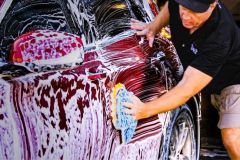 Best Car Wash for Chevy Equinox Plastic Trim CareDiscover how to choose the best car wash near me for Chevy Equinox models and prevent plastic trim drying streaks with proper washing and detailing techniques.
 Car Wash Near Me With Fleet Account Management and ReportsDiscover how a car wash near me with fleet account management, online billing, and detailed reports helps businesses save time, control costs, and keep company vehicles clean.
 Best Car Wash for Convertible Tops Near Me