What this guide helps you decide
Use the article to prepare questions, compare public listing signals, and avoid choosing a provider from one headline, rating, or search result alone.
- Step 1: Gather the Right Materials
- Step 2: Prepare the Truck for Washing
- Step 3: Use the Right Washing Techniques
- Confirm current hours, services, prices, appointment rules, and availability with the provider.
- Compare more than one listing when the decision affects safety, cost, or travel time.
- Use public ratings and photos as signals, not guarantees.
- Step 1: Gather the Right Materials
- Step 2: Prepare the Truck for Washing
- Step 3: Use the Right Washing Techniques
- Step 4: Drying and Finishing Touches
- Step 5: Ongoing Care for Custom Paint Jobs
Step 1: Gather the Right Materials
Before washing your pickup truck with a custom paint job, it’s essential to gather the appropriate materials. Custom paint jobs require special care, so avoid harsh chemicals and abrasive materials. Here’s what you’ll need:
- A gentle car shampoo (specifically formulated for vehicles with custom paint jobs)
- A microfiber wash mitt
- A hose with a gentle spray nozzle
- A bucket with grit guard (to avoid contaminants scratching the paint)
- Microfiber towels for drying
- Wax or paint sealant to protect the paint
These materials will help protect your paint while ensuring a thorough and safe wash.
Step 2: Prepare the Truck for Washing
Before you start washing, make sure your truck is parked in a shaded area to prevent soap from drying too quickly and leaving water spots. Rinse your truck thoroughly with water to remove any loose dirt or debris. This step is crucial to prevent scratching the surface during the wash process.
Pay special attention to areas where dirt or grime can accumulate, such as the wheels, wheel arches, and undercarriage. These areas may require a separate wash to ensure no abrasive material remains on the paint during the next steps.
Step 3: Use the Right Washing Techniques
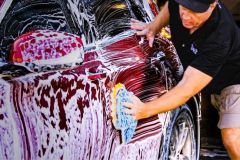
When washing your custom-painted pickup truck, use a gentle, two-bucket method. Fill one bucket with water and car shampoo, and the other with clean water to rinse your mitt. This helps prevent dirt from transferring back onto the paint and causing scratches. Always start washing from the top down to avoid dirt from lower parts of the truck re-contaminating areas you’ve already cleaned.
Use a microfiber wash mitt to apply the soapy water gently, using straight motions rather than circular ones, which can increase the risk of swirl marks on custom paint jobs. Rinse the mitt often in the clean water bucket, and change the water if it becomes too dirty.
Step 4: Drying and Finishing Touches
Once your truck is clean, it’s time to dry it. Always use a soft, clean microfiber towel to dry your vehicle. Avoid using old towels or rough materials, as they can scratch the paint. Gently blot the surface rather than rubbing to absorb water without damaging the custom paint.
If you want to add extra protection to the custom paint job, consider applying a layer of wax or paint sealant after the truck is dry. This not only protects the paint from dirt and contaminants but also adds a glossy finish. Always use products that are designed specifically for custom or delicate paint finishes.
Step 5: Ongoing Care for Custom Paint Jobs
Washing your truck regularly is crucial, but ongoing maintenance for a custom paint job is equally important. Avoid washing your truck under harsh sunlight or in freezing temperatures, as extreme conditions can damage the paint over time. Also, try to keep your truck protected from road salts, bird droppings, and tree sap, as these can damage the paint and reduce its lifespan.
For added protection, consider getting your truck professionally detailed from time to time, or applying a ceramic coating, which can help shield the paint from contaminants. Regular washing combined with proper care ensures that your custom paint job stays vibrant and well-preserved for years.
Related Car Wash Guides
Keep reading if you are still comparing service scope, estimate questions, maintenance needs, or listing quality.
 How to Clean Car Navigation Screen Without DamageLearn How to Clean Car Navigation Screen safely without harsh chemicals. Discover the best cleaning methods, tools, mistakes to avoid, and professional car care tips for keeping your touchscreen clear.
 Why Wash Your Car Before Waxing or Sealing? Prep MattersLearn why you should wash your car before applying wax or sealant and how proper prep work improves shine, protection, and long-lasting results for your vehicle.
 Steam Car Wash Near Me for Interior Sanitizing Without WaterDiscover how a car wash near me that uses steam cleaning can sanitize your vehicle interior without water, remove odors, and provide an eco friendly deep cleaning solution.
 Best Car Wash for Chevy Equinox Plastic Trim CareDiscover how to choose the best car wash near me for Chevy Equinox models and prevent plastic trim drying streaks with proper washing and detailing techniques.
 Car Wash Near Me With Fleet Account Management and ReportsDiscover how a car wash near me with fleet account management, online billing, and detailed reports helps businesses save time, control costs, and keep company vehicles clean.
 Best Car Wash for Convertible Tops Near Me